
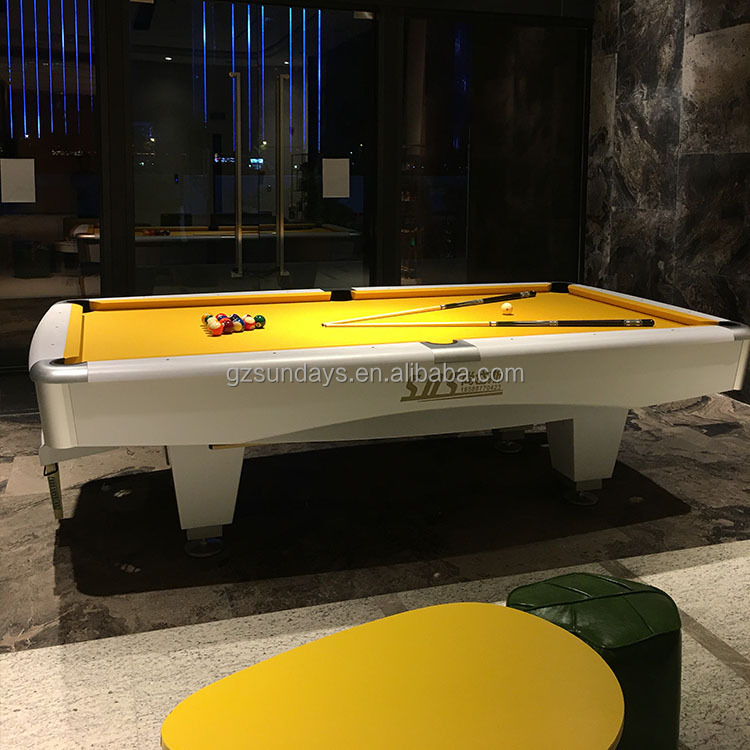
1. Start with the playing format and room
Confirm whether the venue needs American pool, Chinese 8-ball, blackball, Russian pyramid or another discipline. The name of the game affects table size, pocket geometry, ball size, cloth and cushion requirements.
Measure the room, doorways, stairs and installation route. A table that fits the floor plan may still be difficult to deliver if slate sections or frame components cannot reach the room.
- Required playing discipline
- Available room size and cue clearance
- Door, lift, stair and loading access
- Expected daily playing hours
2. Compare the structure beneath the cloth
Ask each supplier to identify the frame material, slate configuration, support system and leveling method in writing. The cabinet appearance alone does not explain how the table will remain stable under repeated commercial use.
For slate tables, confirm the number of sections, listed thickness and how the slate is supported. Final suitability should be agreed for the selected model rather than assumed from a generic catalog image.
- Frame and leg structure
- Slate sections and listed thickness
- Leveling points and installation method
- Replaceable commercial components
3. Specify cushions, pockets and cloth
Playing response depends on matched cushions, pockets, cloth and balls. Request the cushion profile, pocket style and cloth options for the exact model. If your market follows a particular rule set, include it in the buying brief.
Commercial venues should also ask how quickly cloth, pocket liners and other wear parts can be replaced. A slightly lower purchase price can be offset by difficult maintenance.
- Cushion profile and rubber specification
- Pocket opening and pocket style
- Cloth brand, grade, color and direction
- Replacement-part availability
4. Decide whether a ball-return system is required
Automatic or gravity ball return can improve venue operation, while drop pockets may suit traditional or design-led rooms. Coin-operated tables add requirements for the coin mechanism, access panels and local payment expectations.
Ask the supplier to confirm how the system is accessed for cleaning and service. The quotation should identify what is included and what is optional.
5. Put branding and packing into the RFQ
For private-label orders, specify logo locations, cabinet colors, cloth colors, manuals, cartons and spare parts before pricing. Export packing should match the product, shipment method and destination handling conditions.
A comparable RFQ includes the model, quantity, destination, customization, target schedule and requested trade term. This lets suppliers price the same scope instead of making different assumptions.
- Logo and finish references
- Trial quantity and repeat-volume estimate
- Destination country and delivery port
- Packing marks, manuals and spare-parts request